Guide
Tiny cabin vs. tiny home: which one do you actually want?
Wheels change the rules. So does calling it an ADU. Use this to pick a path before you shop kits.
Updated September 8, 2026
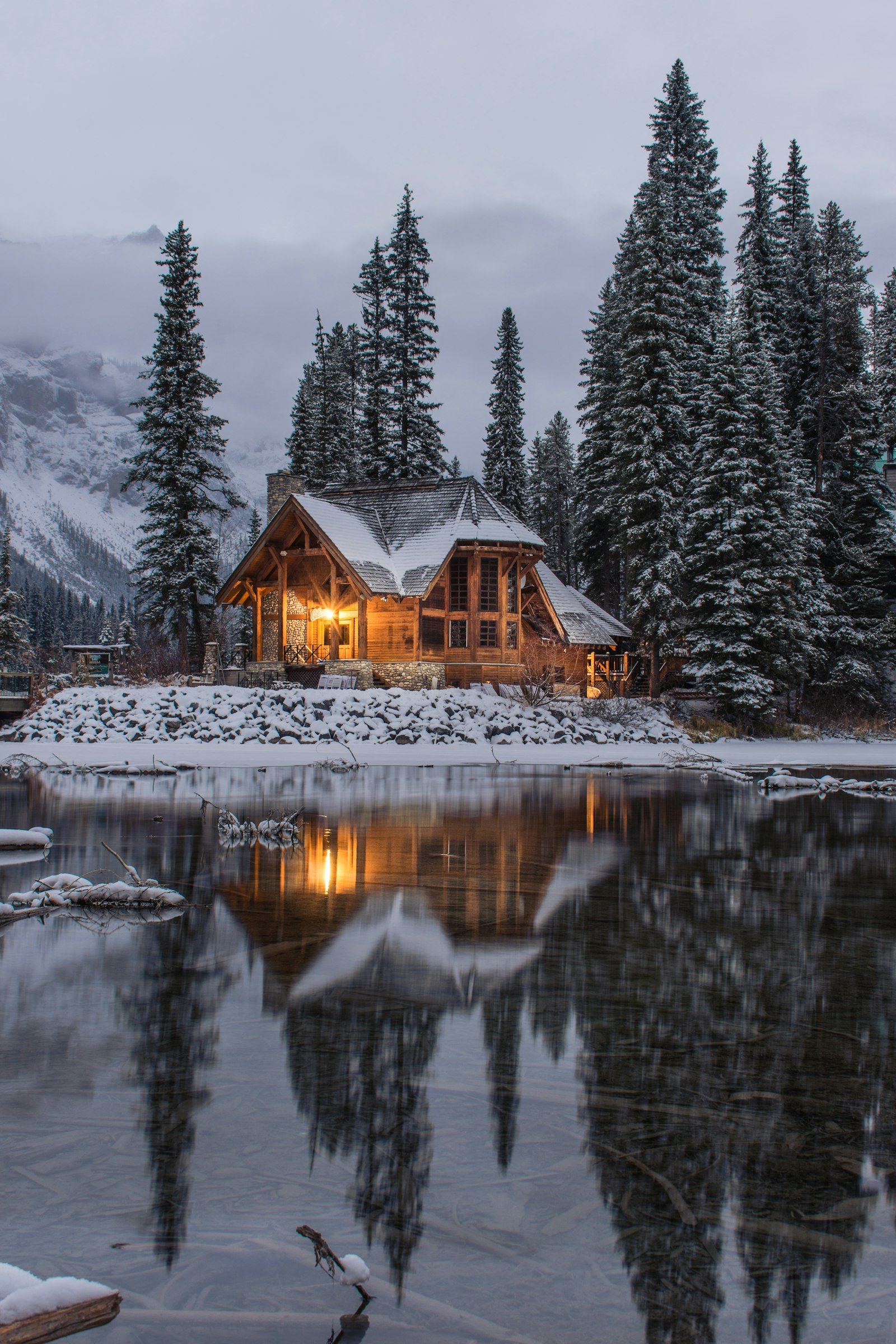
“Tiny cabin” and “tiny home” get used as if they were the same product with different Instagram filters. They are not. The difference that matters is not square footage. It is how the building is classified — on a foundation, on a trailer, or as an accessory dwelling — because that classification decides permits, lenders, insurers, and whether you can live in it year-round.
Tiny Cabin matches kits and builders for cabins. We still explain the other paths so you do not buy the wrong crate.
Three boxes people mix up
1. Tiny cabin (usually foundation-built)
A small, one-story or lofted building meant to sit on piers, a slab, or a crawlspace. It may be sold as a kit, a panelized shell, or a stick-built job. In many counties it is an accessory structure, a cabin, or — if you add a kitchen and full-time occupancy — something closer to a dwelling. Sleeping lofts, wood stoves, and simple kitchens are common. It is not designed to be towed.
2. Tiny house on wheels (THOW)
A dwelling built on a trailer. Movement is the point of the chassis even if you never leave the first pad. Many units are built to RV or tiny house construction standards rather than the local residential code. Parking, dumping tanks, and whether you can claim it as a residence are local fights, not brochure features.
3. ADU or small house
A legal second dwelling (or a very small primary) built to residential code, with the inspections that come with that. Some “cabin kits” can be adapted into an ADU if the manufacturer provides engineered drawings and the design meets egress, insulation, and energy rules. Many cannot without redesign.
What actually changes day to day
| Foundation cabin | Tiny house on wheels | ADU / small house | |
|---|---|---|---|
| Typical intent | Land you control; stay or visit | Move, or park where RVs are allowed | Legal full-time dwelling |
| Code path | Building permit, or limited cabin/ag rules | RV / trailer rules; sometimes none of the above | IRC / local residential + ADU ordinance |
| Utilities | Well/septic or hookups you install | Hookups, tanks, or both | Required like a house |
| Financing | Cash, construction, or land loan | Personal, RV, or specialized tiny-house loans | Mortgage-like products more often available |
| Resale | Tied to the land | Tied to the trailer title | Tied to the property as a dwelling |
Lofts, snow, and “I just want a simple cabin”
A loft that feels charming in a 10-foot-wide THOW can be a code problem in a permitted dwelling (ceiling height, stairs, egress). A metal roof that is fine in the South may be underspec’d for a 60 psf snow load. A cabin kit sold as a “weekend shelter” may be perfectly honest — and still illegal to live in full-time on your lot.
If your goal is a quiet building on land you own, start with a foundation cabin and ask the county what occupancy they will allow. If your goal is to relocate every year, a THOW is the more honest product. If your goal is a rental unit your lender and insurer understand, price an ADU and only then look at kits that can meet that path.
A simple way to choose
- Will this sit on land you own (or have a long lease on) for years?
- Do you need it to be a legal full-time residence?
- Do you need to move it more than once?
- Will a bank or insurer be involved?
Yes / yes / no / maybe → look at ADU-capable cabins and builders who pull permits. Yes / no / no / cash → a foundation cabin kit is usually the cleaner project. No / varies / yes → you are shopping a tiny house on wheels, which is outside this site’s matching focus.
When you know which box you are in, use criteria to compare kits and map the permit stack.